What a Pergola Adds to Your Backyard
Quick Answer: A pergola adds a defined outdoor room to your backyard. It gives you filtered shade from the Central Texas sun, a visual frame that makes an open yard feel finished, and a natural home for dining, lounging, or cooking. It also extends the hours you can comfortably spend outside, supports lighting, fans, and climbing plants, and connects the house to the yard in a way a bare patio never does. The best results come from planning the size, orientation, and posts around how you actually use the space and how your soil and sun behave.
Picture the typical backyard in Georgetown or Round Rock in late afternoon. There is a slab or a patch of lawn, a couple of chairs, and a sun that has been beating on the west side of the house since lunch. The yard is technically there, but nobody wants to stand in it. So the family stays inside, and the space you paid for and maintain goes mostly unused for half the year.
A pergola changes that math. It is one of the simplest structures to add to a property, and one of the most noticeable once it is standing. But the benefits go well beyond a few boards overhead. A well designed pergola shapes how a yard feels, how it works, and how long you can enjoy it each day. Here is what one really adds, and how to think through the decisions that make the difference between a pergola people love and one that sits empty.
We build custom pergolas and composite decks across Georgetown, Austin, Round Rock, Cedar Park, Leander, and Pflugerville, and the same questions come up on nearly every project. This is the plain language version of what we tell homeowners when they ask what a pergola will actually do for their yard.
It Turns Open Yard Into a Defined Outdoor Room
The first thing a pergola adds is structure. An open yard has no edges, and people tend to avoid spaces without edges. There is nowhere to anchor a table, no sense of where the dining area ends and the lawn begins, and no feeling of being somewhere on purpose.
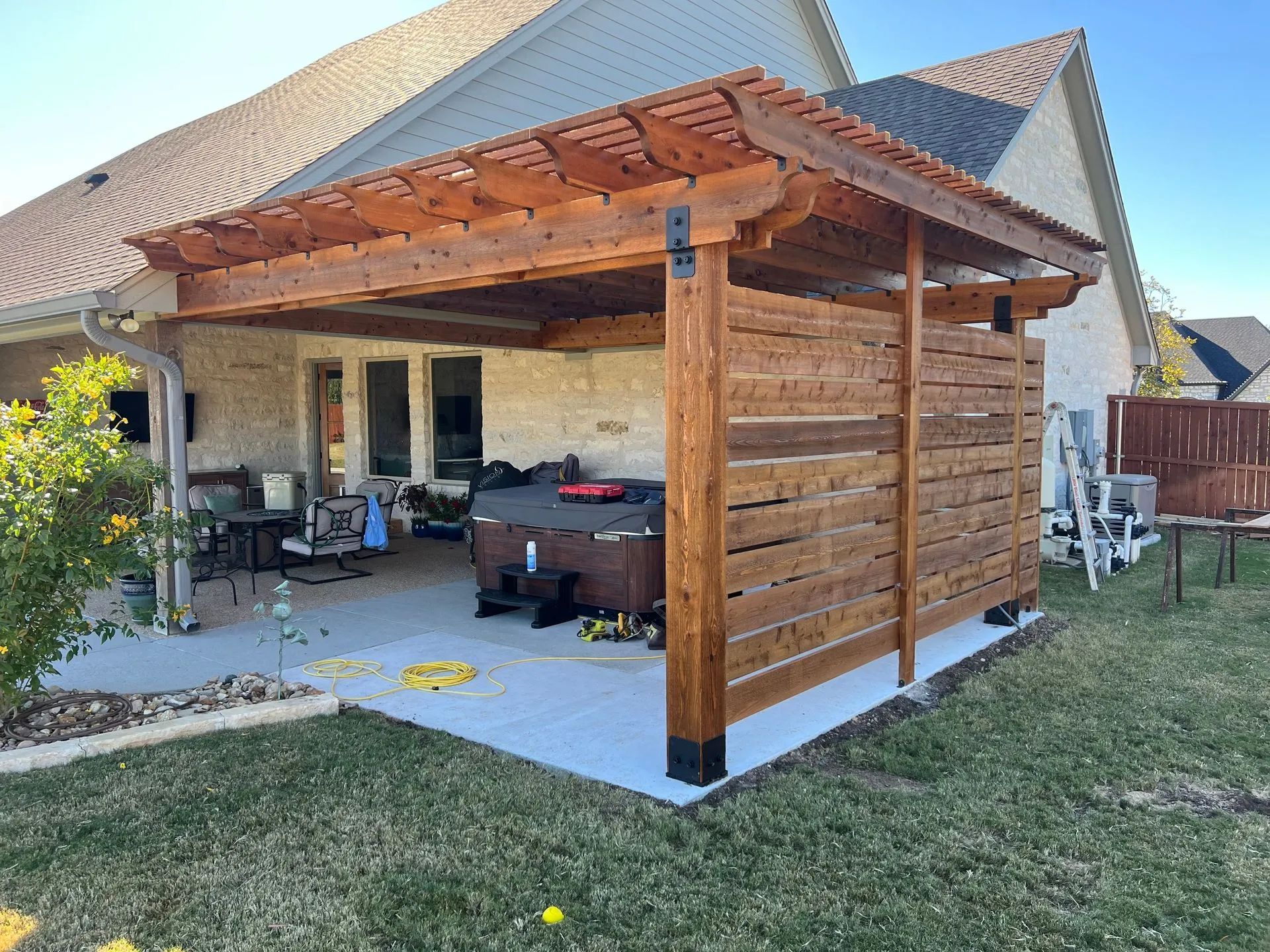
A pergola solves this without walls. Four or more posts and an open overhead frame draw an invisible boundary, and the space inside suddenly reads as a room. Furniture has a place to sit. Guests know where to gather. The yard stops feeling like leftover space behind the house and starts feeling like an extension of the living area inside it.
This matters more than it sounds. When we walk a property with a homeowner, the conversation often starts with a complaint like "we never use the back patio." Nine times out of ten the patio is fine. It simply has no ceiling, no scale, and no reason to linger. Adding the overhead frame is what gives the space its purpose.
There is a design side to this too. A pergola adds vertical lines to a yard that is otherwise flat. It breaks up the visual horizon, adds a focal point you can see from the kitchen window, and gives the back of the house a more finished look. Homes with a well placed pergola tend to look like the outdoor space was planned along with the house rather than added as an afterthought.
It Gives You Shade That Actually Works in Central Texas
If there is one benefit that matters most in this part of the state, it is shade. Central Texas summers are long, bright, and hot, and a patio in direct sun can be unusable from late morning until well after dinner. A pergola is the most flexible way to change that.
Unlike a solid roof, an open pergola filters the sun. The slats or rafters cast a pattern of light and shade, cutting the harshest direct exposure while still letting air and daylight through. That means the space underneath stays brighter and more open than a covered porch, and warm air does not get trapped the way it can under a solid ceiling.
How much shade you get depends on the design. Closer spaced rafters block more sun. Wider spacing lets more light through. Some designs add a second layer of cross members, or fabric shade panels that can be pulled across when the afternoon gets intense. We plan this with you, because the right answer depends on which way your yard faces and when you use it.
TIP: Before you settle on a location, watch where the sun falls in your yard at the time you plan to use the space most. A patio used mainly for evening dinners needs to handle the low western sun, and that usually calls for tighter rafter spacing or a side screen on the west edge. A space for morning coffee has very different needs.
Shade is not just about comfort. It also protects what is underneath. Outdoor furniture, cushions, grills, and decking all last longer when they are not taking full sun every day. A pergola over a seating area quietly extends the life of everything you put there, and that is a benefit people rarely think about until they notice how much faster their unshaded furniture fades.
It Extends the Hours and Months You Use the Yard
Once you have shade and a defined space, something changes about the way the family uses the yard. The window of comfortable hours gets wider. Instead of only stepping outside at dusk when the heat breaks, you can sit out in the late afternoon. Instead of avoiding the yard from June through September, you find pockets of the day that work.
The shoulder seasons benefit too. Central Texas has a long stretch of spring and fall weather that is close to perfect for being outdoors, and a pergola makes the most of it. Add a ceiling fan, a few strings of lighting, or an outdoor heater rated for open structures, and the space becomes usable from early morning to late evening across most of the year.
Lighting deserves special mention. A pergola gives you a natural place to mount fixtures, run string lights, or install soft downlights along the beams. The overhead frame turns a dark backyard into a glowing room at night, and that changes how inviting the whole property feels from the inside looking out. Many homeowners tell us that the lighting alone made them start using the yard after sunset for the first time.
It Creates a Home for Dining, Lounging, and Cooking
A pergola does not have to serve one purpose. The best ones are planned around the zones a family really uses, and the structure gives each zone a clear home.
Dining is the most common. A table under a pergola feels like a proper outdoor dining room, sheltered from sun, close to the kitchen, and defined enough that meals feel like an occasion. In a climate where outdoor dining season lasts from March into November, a real dining space gets used constantly.
Lounging is the second. A pair of deep chairs or a sectional under a pergola makes a spot for conversation, reading, or watching the kids play. Because the overhead frame creates a sense of enclosure, people stay longer than they do in open seating.
Cooking is the third, and it takes more planning. Outdoor kitchens and grills need clearance, ventilation, and thought about where heat and smoke go. A pergola can shelter the cooking zone and keep the cook out of the sun, but the design has to respect the distance between fire and framing. We work through this with you early so the layout is safe and comfortable rather than crowded.
A well planned pergola can handle more than one of these at the same time. A larger structure can hold a dining table at one end and a lounge area at the other, with lighting and a fan tying the two together. A smaller one can anchor a single purpose beautifully. The point is to decide how you want to live outside and let that shape the structure, instead of building a frame and hoping the use shows up.
It Supports Plants, Privacy, and Softer Edges
A pergola is also a natural frame for greenery. Climbing plants can grow up the posts and across the overhead beams, adding shade, texture, and a living ceiling that changes with the seasons. In Central Texas, this works best with plants that tolerate heat and dry spells and do not need constant attention. Native and adapted vines tend to be the most reliable, and a local nursery can point you to what does well in your part of Williamson or Travis County.
Even without vines, a pergola makes room for hanging planters, potted trees at the corners, and trailing plants along the beams. All of it softens the hard lines of the structure and blends it into the yard.
Privacy is another quiet benefit. In newer neighborhoods across Leander, Hutto, and Pflugerville, lots are often close together and fences only go so high. A pergola with a side screen, a lattice panel, or a row of tall planters along one edge can create a private corner in a yard that otherwise feels exposed. The overhead frame also blocks the sightline from a second story window next door, which is more valuable than most people expect until they sit down under one.
What to Plan Before You Build
A pergola looks simple, and the structure is, but the planning is where the results are decided. A few points make the biggest difference.
Size And Proportion
A pergola that is too small feels cramped, while one that is oversized can overwhelm the yard. Start with your furniture, then allow comfortable walking space around it. Size the structure around how you plan to use it.
Orientation And Sun
Placement affects how much shade you receive and when. Consider the time of day you will use the space and where the sun sits then. Planning carefully helps prevent building a beautiful structure in the wrong location.
Material
Wood, composite, and metal each perform differently in Central Texas. Wood offers warmth but requires upkeep, composite resists fading and moisture, while metal provides strength and clean lines. Choose based on appearance, durability, and maintenance preferences.
Foundation
A pergola's foundation remains hidden, but it is critical. Central Texas often has expansive clay soil that swells when wet and shrinks when dry. Properly sized footings help posts remain level, stable, and aligned over time.
Warning: In Williamson County clay, a pergola set on shallow or undersized footings can lean, shift, or twist as the ground moves through wet and dry cycles. The frame may look perfect the day it is finished and drift out of true within a couple of seasons. Ask any builder how the posts will be anchored and how the footings are designed for your soil before you commit.
Integration
Plan for lighting, fans, outlets, and outdoor kitchen features before construction begins. Adding wiring and structural support during installation is easier than retrofitting later. Early planning also keeps the finished pergola cleaner and more cohesive.
How a Custom Build Differs
You can buy a pergola kit, and for some situations that is a fair choice. But a custom pergola is designed around your house, your lot, and your plans. The proportions match the roofline. The posts land where they suit the yard rather than where a kit dictates. The rafter spacing is chosen for the shade you need. The footings are engineered for the soil under your specific property.
That difference shows up over time. Custom structures tend to look like they belong, and they tend to hold up because every part was chosen for the conditions. We build collaboratively, which means we sit down with you, look at the yard together, talk through how you want to use the space, and shape the design around your answers. You see the plan before we build, and you have a say in the details.
Frequently Asked Questions
What does a pergola add to a backyard?
A pergola adds a defined outdoor room, filtered shade, and a place for dining or lounging. It supports lighting, fans, and climbing plants while connecting the house to the yard so you actually use it.
Does a pergola provide enough shade in the Texas heat?
An open pergola filters sunlight rather than blocking it, cutting harsh exposure while keeping the space bright and airy. Closer rafters, extra cross members, or shade panels can add coverage based on your yard's direction.
Can I add a pergola to an existing patio or deck?
In many cases, yes. A pergola can go over an existing patio or attach to a deck if the structure and footings can carry it. We will tell you whether a new foundation makes more sense.
Is a pergola better attached to the house or freestanding?
Neither is better in every case. An attached pergola creates a smooth transition from the house and often suits smaller lots. A freestanding one gives a distant corner of a larger property its own purpose.
What material holds up best for a pergola in Central Texas?
Composite and metal handle heat, sun, and moisture with less upkeep than wood. Wood offers a natural look but needs regular attention. We weigh the tradeoffs with you based on your preferred look and maintenance.
Can I add lighting or a ceiling fan to a pergola?
Yes, and it is best to plan for it early. The frame can be built to carry a ceiling fan and route wiring cleanly, which is far easier than retrofitting after the structure is up.
How long does a pergola last?
That depends on the material, the footings, and the care it receives. A pergola built on sound footings for local clay, using materials suited to Texas sun, can serve a family well for many years.
Turning Unused Yards Into Places Families Actually Gather
A pergola rarely looks like much on paper, just posts and beams overhead, yet it quietly changes how a backyard feels and functions every single day. It turns open ground into a defined room, filters the harshest Central Texas sun, and gives dining, lounging, and cooking a natural home. Add lighting, a fan, or a few climbing vines, and the hours you spend outside comfortably stretch from late afternoon well into the cool evening across most of the year.
After 10+ years of building outdoor spaces around Georgetown, TX, we have learned that the structures families love most are the ones planned around real life. Footings set for shifting clay, rafters spaced for the afternoon sun, and wiring tucked in before the frame goes up all make the difference between a pergola that sits empty and one that becomes the favorite room of the house. At Diverse Trades Custom Construction and Remodeling, that careful planning is simply how every project begins.
Recent Posts