Composite vs. Wood Decking: Which One Holds Up in Central Texas?
Quick Answer: Composite decking is made from wood fibers blended with recycled polymers, and it resists rot, insects, splintering, and fading while asking for little more than an occasional wash. A quality composite deck can last 25 to 30 years or more. Wood decking — usually pressure-treated pine, cedar, or redwood — costs less up front and stays cooler underfoot, but it needs regular cleaning, sealing, or staining and typically lasts around 15 to 20 years before boards begin to crack, cup, or grey. In Central Texas, where intense sun, UV exposure, and expansive clay soil all work against outdoor structures, the right choice comes down to how much upkeep you want to sign up for and how you plan to use the space.
If you have stood on a backyard deck in Williamson County in late July, you already understand the problem. The wood underfoot is faded and splintering at the edges, the boards have pulled and twisted after years of swelling and drying, and the whole thing looks a decade older than it is. Central Texas is hard on outdoor materials. The sun is relentless from spring through fall, the clay soil beneath your yard shifts as it takes on and loses moisture, and the outdoor-living season here runs long enough that your deck earns real use. Choosing between composite and wood is the first real decision in any deck project, and it shapes everything that follows. We build custom composite decks across Georgetown and the surrounding area, and we walk homeowners through this exact comparison all the time. Here is how the two materials actually stack up.
What You Are Actually Choosing Between
Before comparing the two, it helps to know what each material is at the board level.
Composite decking is an engineered product. Manufacturers blend recycled wood fibers with recycled and virgin polymers, then form the mix into boards. Most composite sold today is *capped* — wrapped in a hard polymer shell that seals the core against moisture and shields it from the sun. A related option, PVC decking, drops the wood fibers entirely and is essentially all plastic, which makes it the lightest and most moisture-proof of the group. Because composite is manufactured rather than milled, the color and texture are consistent from board to board, and it never carries knots, sap pockets, or weak grain.
Wood decking comes in a few forms. Pressure-treated pine is the most common and most affordable, chemically treated to resist rot and insects. Cedar and redwood are the premium natural options, prized for their grain, their natural resistance to decay, and the way they stay cooler in direct sun. All wood is a living material, which is its charm and its weakness: it looks and feels like the real thing because it is, but it also moves, absorbs water, and breaks down over time.
The differences between these materials show up across five areas that matter most in our climate: durability, appearance, heat and UV behavior, maintenance, and longevity.
Durability: How Each Handles Weather, Insects, and Soil Movement
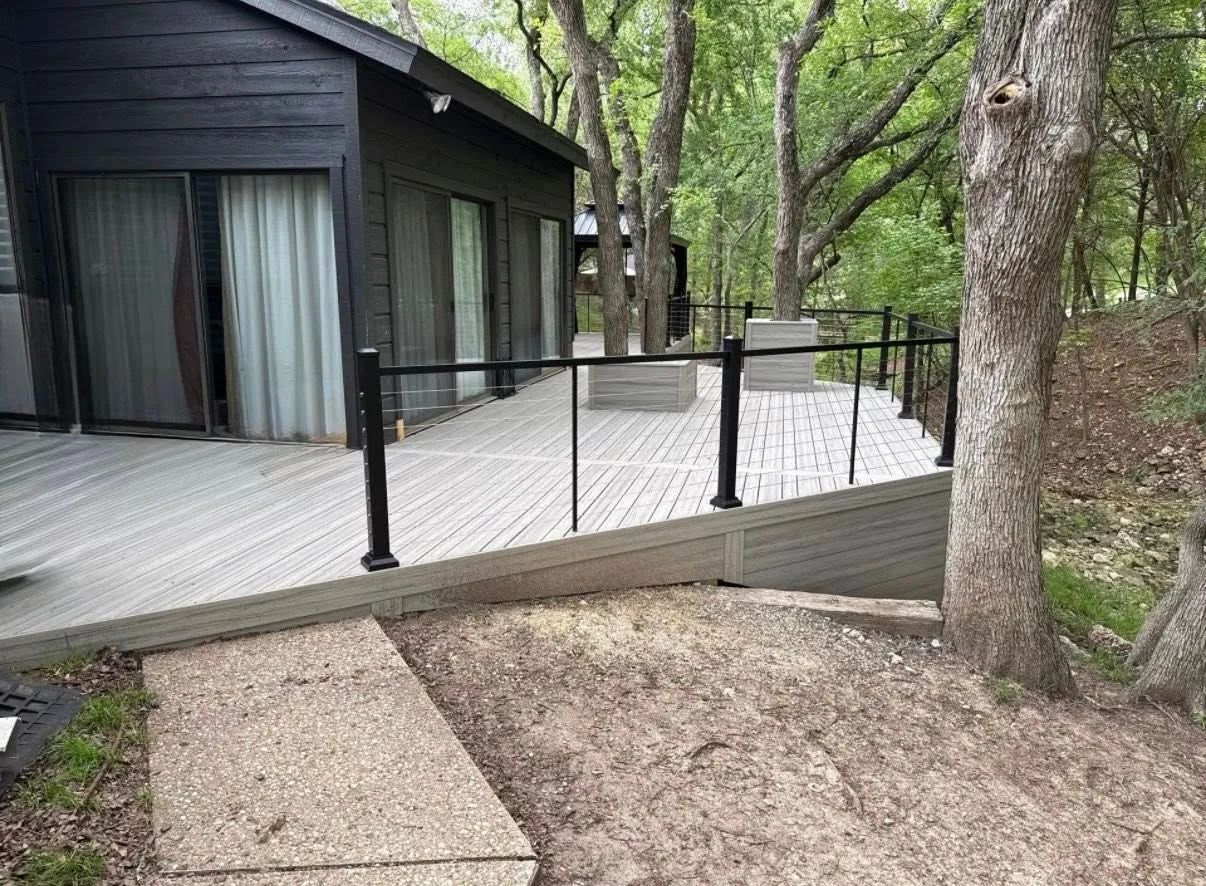
This is where composite earns its reputation. A capped composite board does not rot, and insects have no interest in it. It resists warping, cracking, and splintering, which means the surface stays flat and safe for bare feet and pets year after year. Water rolls off rather than soaking in, so the seasonal swings between dry spells and heavy Central Texas downpours do not swell the boards or open up cracks. That stability is a large part of why we build with it.
Wood is more complicated. Pressure-treated pine is genuinely tough and, kept up, will outlast untreated cedar or redwood. But every wood species absorbs moisture, and moisture is what drives the trouble. Boards swell when it rains and shrink when the sun bakes them dry, and that repeated movement is what eventually cups, splits, and pops fastener heads loose. Cedar and redwood resist decay naturally and hold up well, but even they grey and soften without regular attention. Some sources point out that solid wood is actually stiffer and stronger per board than composite, which is true — wood carries load well. The issue is rarely raw strength. It is how the material behaves over years of exposure.
Warning: In Central Texas, the bigger durability threat often lives under the deck, not on top of it. Our expansive clay soil swells when wet and contracts when dry, and that movement can heave or settle footings and racking a poorly built frame regardless of whether you chose composite or wood on the surface. A beautiful deck board sitting on a substructure that was not designed for shifting soil will still telegraph every problem below. Proper footings, framing, and drainage matter as much as the decking material itself.
Appearance: Natural Grain Versus Engineered Consistency
Wood wins the honest-beauty contest for a lot of people, and understandably so. Cedar and redwood have depth, variation, and a grain no factory fully reproduces. A freshly finished wood deck is hard to beat on day one. The catch is that the look does not hold on its own. Left alone under the Texas sun, wood greys within a season or two, and keeping that rich tone means re-staining on a schedule.
Composite trades some of that natural character for consistency that lasts. Today's capped boards are convincingly wood-like, with embossed grain patterns and multi-tonal streaking, and they are engineered to hold their color rather than fade. That matters here because our UV exposure is punishing — the same sun that greys a wood deck also drives the color loss composite is built to resist. If you want a deck that looks the same in year ten as it did the week we finished it, composite has the edge. If you love natural grain and accept that keeping it means ongoing work, wood delivers a look composite only imitates.
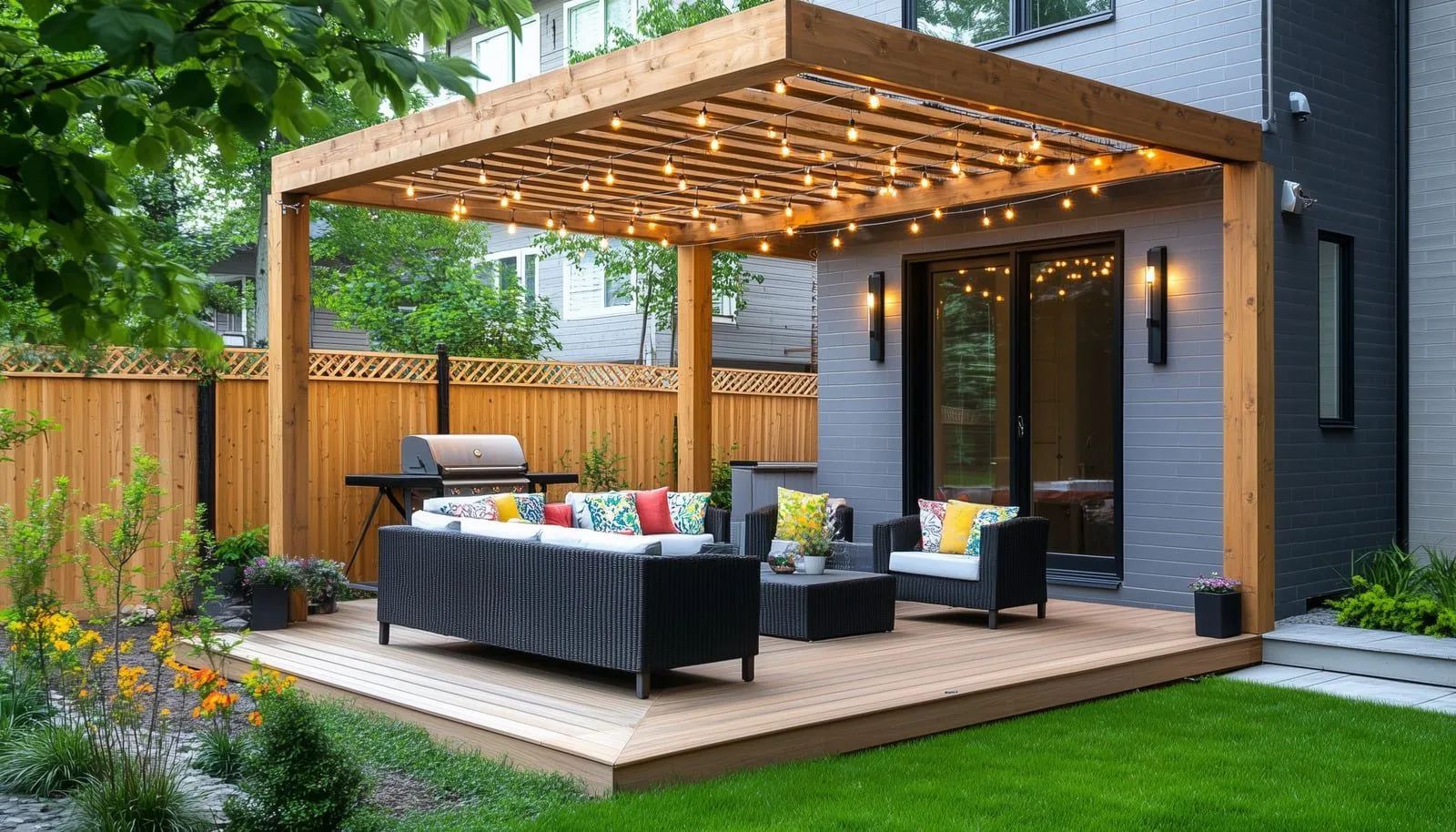
There is also a design dimension. Because composite is dimensionally stable and comes in long, uniform boards, it lends itself to custom work — multi-level layouts, built-in bench seating, integrated lighting, and clean railing lines all come together predictably. We use that stability to design outdoor spaces that fit how a family actually lives in the backyard.
Heat and UV: The Central Texas Sun Test
No comparison written for our region is complete without talking about heat, and this is the one area where wood has a real, physical advantage. Wood stays noticeably cooler underfoot in direct sun. Composite — especially darker boards and dark PVC — absorbs solar heat and can get hot enough to be uncomfortable on bare feet during the peak of a summer afternoon. Any honest builder will tell you that, and we do.
The good news is that the gap is manageable with smart choices. Lighter composite colors absorb far less heat than dark ones, so board color is a genuine design decision here, not just an aesthetic one. Shade changes everything as well — a pergola, an awning, or a covered section keeps any deck surface, composite or wood, dramatically cooler. And the trade runs both directions: while wood stays cooler to the touch, it takes the full brunt of UV degradation on its surface, fading and drying out in a way composite's protective cap is specifically designed to prevent.
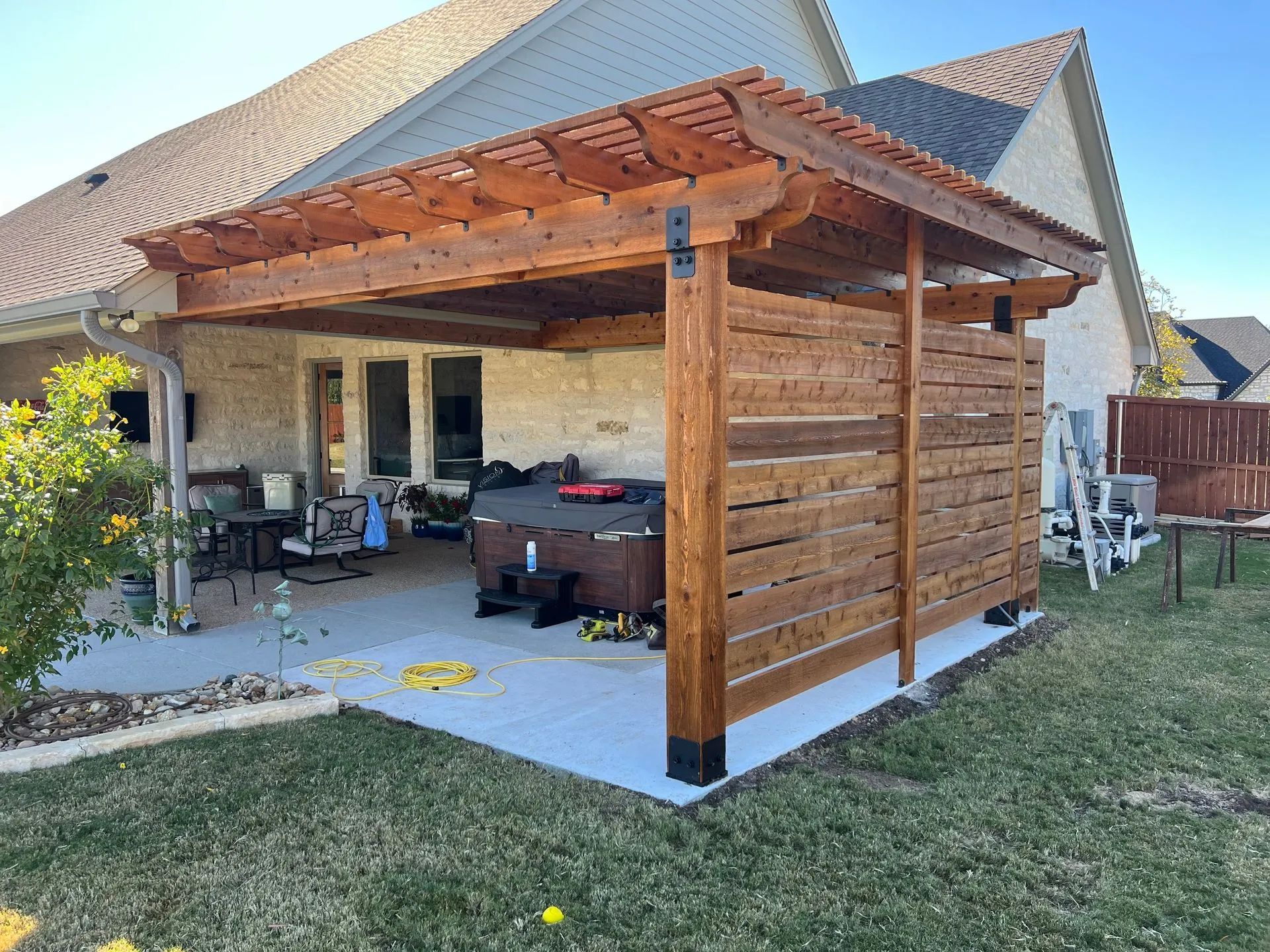
TIP: If you love the low-maintenance side of composite but worry about summer heat, plan the deck and its shade together from the start. Choosing a lighter board color and pairing the deck with a pergola or covered area lets you enjoy the surface barefoot through most of the outdoor season instead of only in the mornings and evenings. Designing shade in from day one is far easier than adding it later.
Maintenance: What Each Deck Asks of You Over the Years
This is where the long-term difference between the two materials becomes obvious, and where a lot of homeowners change their minds.
Composite asks for very little. There is no staining, sealing, or sanding — ever. Keeping it looking good usually means washing it with soap and water a couple of times a year to clear pollen, dust, and the fine grime that settles on any Central Texas surface. Because the boards do not absorb moisture, mold and mildew have a much harder time taking hold. For homeowners who would rather use their weekends on the deck than working on it, this is the deciding factor.
Wood is the opposite. To hold its color and fight off rot, a wood deck needs regular cleaning and re-sealing or re-staining, often on roughly a yearly cycle in a climate this sunny. Pressure-treated pine can last a long time, but that longevity depends on the owner actually doing the upkeep — washing, sealing, replacing the occasional split board, and re-setting fasteners that work loose as the wood moves. Skip a few seasons in this sun and the deck ages fast. None of that maintenance is difficult, but it is real, recurring work, and it never stops for as long as you own the deck.
Longevity: How Long Each Deck Lasts
Put the two on a timeline and the picture sharpens. A well-built composite deck commonly lasts 25 to 30 years or more, and it spends those decades looking close to new because it resists the fading and structural wear that age other materials. That lifespan is a big reason composite reads as a long-term investment rather than a short-term fix.
Wood's lifespan swings on species and care. Cedar decking can last up to around 20 years when it is maintained well, and pressure-treated pine can run a long time under a diligent owner. But those numbers assume the upkeep happens. A neglected wood deck in full Texas sun can start cracking, curling, and splintering years ahead of schedule. Composite's advantage is not just that it can last longer — it is that its long life does not depend on you keeping a maintenance calendar.
Matching the Material to How You Live Outside
There is no single right answer, only the right answer for your home and habits. Wood makes sense if you love natural grain, want the coolest possible surface underfoot, and genuinely do not mind the regular sealing and staining that keeps it looking its best. Composite makes sense if you want a deck that shrugs off our heat, humidity swings, and UV, holds its color for decades, and gives you weekends back instead of taking them.
For most Central Texas families building a deck they intend to keep and actually use through our long outdoor season, the low upkeep, color stability, and long lifespan of composite line up well with the realities of the climate. That is the material we specialize in, and we design each build — footings, framing, board color, shade, and built-in features — around how you plan to live in the space and the specific conditions of your lot.
Frequently Asked Questions
Is composite decking worth it compared to wood?
Depends on what you value. Composite needs no staining, resists rot and insects, holds color under UV, and lasts 25 to 30 years. Wood costs less upfront with natural grain but needs ongoing maintenance and has shorter lifespan overall.
Does composite decking get too hot to walk on in Texas?
Composite, especially dark colors, absorbs more solar heat than wood and can feel hot during peak summer afternoons. Choosing lighter board colors and pairing the deck with pergola or covered shade keeps it comfortable through most seasons.
How long does a composite deck last versus a wood deck?
Quality composite commonly lasts 25 to 30 years with routine cleaning. Cedar lasts up to 20 years when maintained, pressure-treated pine longer with regular sealing. Composite's lifespan doesn't depend on ongoing maintenance like wood's does.
Does composite decking fade in the sun?
Modern capped composite resists fading and holds color far better than wood, which greys quickly under UV. Subtle lightening can occur over many years, but it's minimal compared to unfinished wood, making color retention a clear advantage.
What decking material is best for Central Texas clay soil?
Clay soil affects the substructure more than the surface. Expansive clay swells and shrinks with moisture, so footings and framing need proper design for movement, regardless of whether you choose composite or wood on top.
Can a composite deck be customized with built-in features?
Yes. Composite's dimensional stability and uniform boards suit custom work, including multi-level layouts, built-in bench seating, integrated lighting, and clean railing systems, planned during design to fit your structure and intended use.
Choosing the Deck That Fits Your Climate
There is no single right answer, only the right answer for your home and habits. Wood makes sense if you love natural grain, want the coolest possible surface underfoot, and genuinely do not mind the regular sealing and staining that keeps it looking its best. Composite makes sense if you want a deck that shrugs off our heat, humidity swings, and UV, holds its color for decades, and gives you weekends back instead of taking them. Over 10+ years building decks around Georgetown, Texas, we've seen which choice tends to hold up.
For most Central Texas families building a deck they intend to keep and actually use through our long outdoor season, the low upkeep, color stability, and long lifespan of
composite
line up well with the realities of the climate. That is the material Diverse Trades Custom Construction and Remodeling
specializes in, designing each build around footings, framing, board color, shade, and built-in features that match how you plan to live in the space and the conditions of your lot.
Recent Posts