Custom Built vs Kit Pergolas: Which One Holds Up in Central Texas Weather
You walk out back the morning after a spring storm and your pergola is leaning. One post has shifted, a couple of slats lifted, and the whole structure looks tired even though you put it up a year ago. You run through it in your head, wondering if you skipped a step during assembly or if the wind was simply worse than the forecast suggested. Maybe a neighbor's pergola made it through fine and yours did not, which only adds to the confusion. Now you are wondering whether you bought the wrong kind, or whether any pergola can really hold up out here.
The honest answer is that the custom versus kit question matters less than how the structure is anchored, what material it is built from, and whether it was designed for the conditions it actually faces. A well anchored kit can outlast a poorly built custom job. Plenty of structures fail not because of the design printed on the box, but because the footings never reached stable ground or the connections were never sized for real wind. But in Central Texas, where the same week can bring forty mile per hour gusts, blistering sun, and a sudden downpour, the gap between the two options grows fast. Those swings test every fastener and footing, and they expose shortcuts within a season or two rather than a decade. Below is how each one is built, where each one fails, and which one tends to last.
Start Here Before You Buy or Replace
If you already have a pergola showing stress, take a few minutes before deciding anything.
- Check each post at the base for movement, rust, or rot.
- Look at the connection points where rafters meet beams for splitting or pulled fasteners.
- Note whether the posts sit in surface brackets or are set into footings.
- Watch how the structure behaves in wind. Visible sway means the bracing or anchoring is undersized.
TIP: Push firmly on a corner post and watch the opposite corner. If the far side moves with it, the frame is racking rather than flexing, which tells you the bracing or post connections are the weak link long before the wood is.
WARNING: Do not climb on or shelter under a pergola that has a shifted post or a cracked beam after high wind. A leaning structure can drop a beam or collapse under added load. Clear the area and have it inspected before anyone stands beneath it.
How Kit Pergolas Are Built and Where They Fail
Kit pergolas fail most often at the connections, not the lumber. They arrive as precut pieces with predrilled holes and lightweight brackets meant for fast assembly, which means the design favors speed over wind resistance. The most common failure we see is surface mounted post bases bolted to a patio or deck. They hold fine on a calm day and lift or pivot the first time a gust catches the open frame.
The second issue is material. Many kits use thinner cedar or treated pine sized for a national average, not for ninety five degree summers and rapid moisture swings. Under that stress the wood cups, checks, and pulls away from fasteners within a few seasons. Aluminum kits avoid the wood movement but transfer all their stability to those same light brackets, so anchoring still decides survival. A kit can absolutely work here, but only when the footings and connections are upgraded beyond what the box includes.
What a Custom Built Pergola Changes
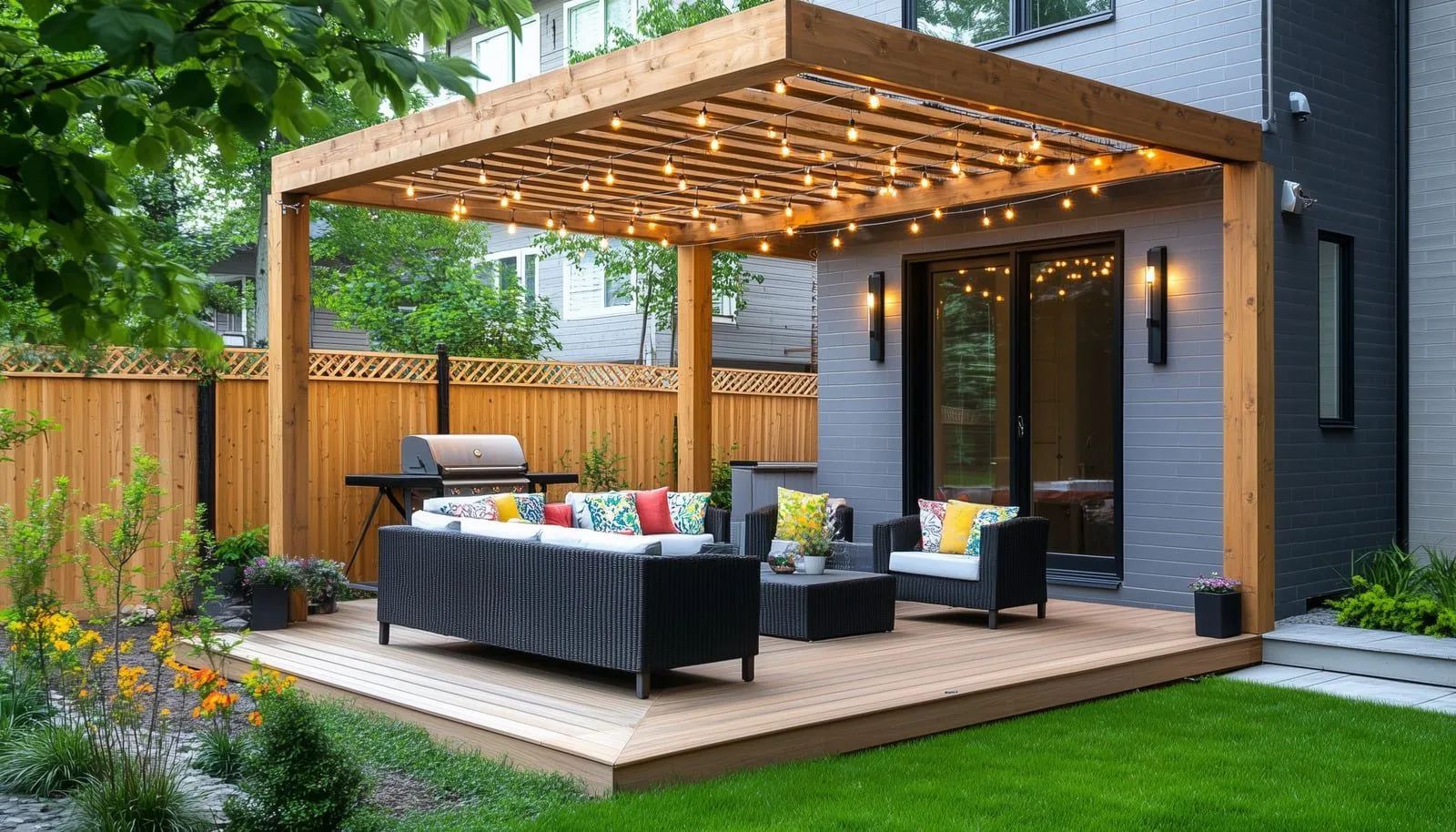
A custom build wins on engineering rather than appearance. We size the posts, set them into proper footings, and detail the bracing for the wind exposure of your specific yard. Posts set into concrete piers eighteen to twenty four inches deep behave completely differently in a storm than a post screwed to a slab.
Material grade is the second advantage. We can select denser, slower drying lumber or rated structural members, seal the cut ends, and orient the grain to limit the cupping that wrecks kit slats. We also detail the rafter to beam connections with hardware that resists uplift instead of relying on a few screws. The tradeoff is time and planning. A custom pergola is not a weekend project, and it asks more of you up front in design decisions.
Side by Side Comparison
| Factor | Kit Pergola | Custom Built Pergola |
|---|---|---|
| Anchoring | Usually surface brackets | Footings or piers sized to soil |
| Wind resistance | Low to moderate without upgrades | High when engineered for exposure |
| Material control | Fixed by manufacturer | Chosen for heat and moisture |
| Wood movement | Common cupping and checking | Reduced through grade and sealing |
| Customization | Limited footprint and span | Built to your yard and shade goals |
| Repairability | Replace whole sections | Repair individual members |
| Setup effort | Fast | Slower, planned build |
| Longevity in storms | Shorter without reinforcement | Longer with proper detailing |
Central Texas Weather Is the Real Test
The conditions here punish shortcuts faster than almost anywhere. Summer surface temperatures on dark slats can climb well past one hundred thirty degrees, baking sealant out of the wood and accelerating splitting. Then a single afternoon storm can swing humidity sharply and drive forty to sixty mile per hour gusts through an open frame that acts like a sail.
The ground is the other half of the story. Much of the area around Georgetown sits on expansive clay over limestone, and that clay shrinks in drought and swells after rain. A post anchored only to a slab moves with the slab. A pier set below the active soil zone stays put. We routinely find pergolas that were level at install and out of square within two seasons purely because the footings never reached stable ground. Hail is the final factor. Lightweight slats and thin aluminum dent and crack where heavier members shrug it off.
Which One Should You Choose
Match the build to your exposure, not to the lowest effort. A kit makes sense for a small, sheltered patio tucked against the house where wind load is low, as long as you upgrade the post bases. For an open yard, a wide span, or anywhere catching full wind, a custom build pays you back in the storms you never have to think about.
A few maintenance habits extend either one. Inspect post bases and fasteners each spring and fall. Reseal exposed wood before the worst of the summer heat arrives. Clear standing water and leaf debris from the tops of beams so moisture does not sit and rot the connections. Tighten any hardware that has worked loose after a windy stretch.
Frequently Asked Questions
Do kit pergolas survive Central Texas wind?
They can, but rarely as shipped. The surface brackets included in most kits are the weak point, and they pivot or lift the first time a real gust catches the open frame. Upgrading to anchored footings or piers and adding proper bracing changes the outcome completely. For sheltered patios a kit may hold, but open, exposed yards demand reinforcement before the first storm season arrives.
Which material handles the heat best?
Denser, properly sealed wood and quality aluminum both perform well, though neither survives neglect. The bigger factor is sealing and grain orientation rather than the species itself. Unsealed thin lumber dries, cups, and splits fastest under direct summer sun and the rapid moisture swings that follow afternoon storms. Aluminum avoids wood movement entirely, but its stability still depends on how firmly the frame is anchored to the ground. (70 words)
Why does my pergola lean after rain?
Almost always the footings rather than the wood. Local clay soil swells when wet and shrinks during drought, and that constant movement shifts any post anchored only to a slab or surface bracket. A post set into a pier below the active soil zone stays put through those cycles. If your structure was level at install and drifted out of square within a season, the anchoring never reached stable ground.
Is a custom pergola worth the extra effort?
For open or wind exposed yards, yes, without much hesitation. The engineering, deeper anchoring, and controlled material selection translate directly into fewer repairs and a structure that stays square through the storm seasons here. A kit can make sense on a small, sheltered patio with upgraded post bases. But the wider the span and the more wind it catches, the more a planned custom build pays you back over time.
How long should a well built pergola last?
With proper footings, quality material, and steady seasonal upkeep, a well built pergola holds its shape for many years instead of sagging within a season or two like an underbuilt kit often does. The structure itself rarely fails first. Connections loosen and sealant breaks down long before the lumber gives out, so inspecting fasteners each spring and resealing exposed wood before summer keeps the whole frame square far longer.
Dependable Custom Construction Built Around Your Exact Exposure
Survival comes down to anchoring and material far more than the label on the box. That principle matters more in Central Texas than most places, where expansive clay, sudden high winds, and brutal summer sun expose every shortcut in a hurry. At Diverse Trades Custom Construction and Remodeling, we have spent more than 10
years building and repairing
pergolas across Georgetown, Texas, and we design each one for the yard it actually stands in. Reach out and we will assess your site, your soil, and your exposure before a single post goes in.
Recent Posts