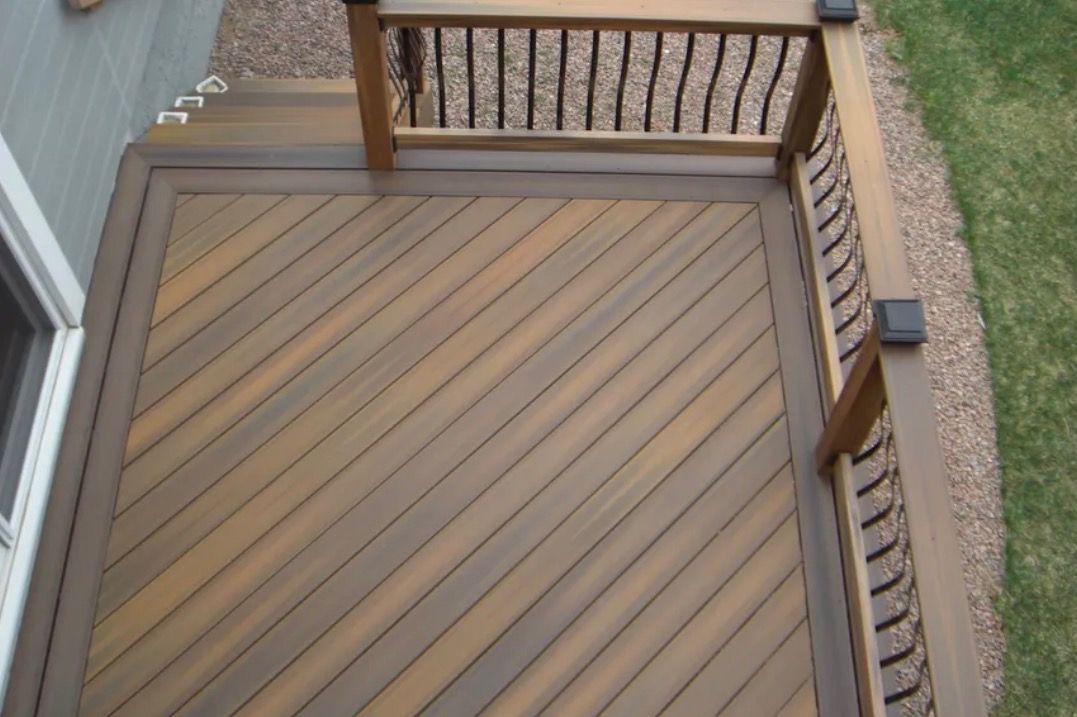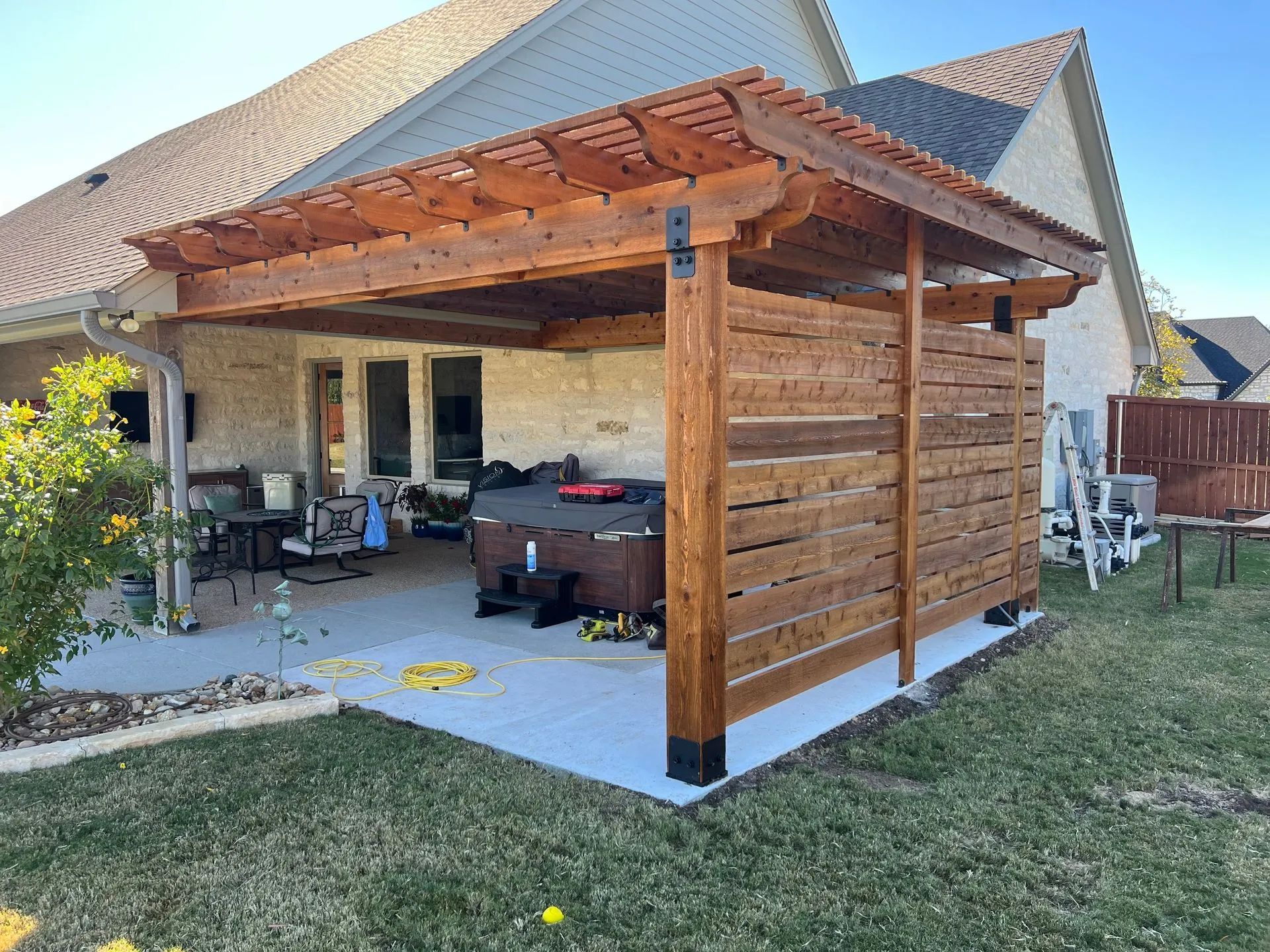
Composite Deck Losing Its Shine? Here Is the Maintenance Routine That Keeps It Looking New
Quick Answer: A composite deck stays looking new with a light routine, not a heavy one. Rinse the boards regularly to keep grit from grinding into the surface, wash the whole deck with mild soap and water a couple of times a year, and deal with spills and stains before they set. Keep furniture, planters, and grills from trapping moisture against the boards, sweep pollen and leaf litter out of the gaps between boards, and check the railing and fastener points once or twice a year. None of it involves sanding, staining, or sealing. The goal is simply to stop dirt, moisture, and debris from sitting on the surface long enough to cause a problem.
Composite decking earns its reputation as the low-maintenance option, and that reputation is fair. You aren't out there every spring with a sander and a bucket of stain. But low maintenance isn't the same as zero maintenance, and the decks that hold their color and finish the longest are the ones where the owner keeps up with a few simple habits instead of ignoring the surface until something looks off.
We build custom composite decks across Georgetown, Round Rock, Cedar Park, Leander, and the rest of Central Texas, and the boards we install go through a lot in this climate. Long stretches of intense sun, oak and cedar pollen thick enough to coat every flat surface in the yard, and downpours that show up fast and heavy all put a composite deck to work. Keeping one looking sharp still doesn't take much time once you know what the surface actually needs.
Why Composite Still Asks for a Little Attention
Composite boards carry a dense outer layer that resists moisture, fading, and rot far better than bare wood. That shell is what lets you skip staining and sealing altogether. What it doesn't do is repel everything that lands on it forever. Dirt, pollen, tree sap, and organic debris can sit on the surface and, given enough time and moisture, start to affect the look and feel of the deck.
Most of what shows up as a "problem" on a composite deck is really just buildup. Grime that hasn't been rinsed away starts to look dull. Pollen that settles into the grain pattern during a heavy bloom season leaves a yellow film if it never gets washed off. None of that is a defect in the material. It is simply what happens when a surface sits outside in Central Texas weather without a periodic reset.
Building a Simple Cleaning Routine
The routine itself takes very little time, and most homeowners can handle it without any special equipment.
A quick rinse with a garden hose every few weeks keeps loose dirt, dust, and pollen from grinding into the surface underfoot, which is where a lot of dulling starts. For the deeper clean, most composite manufacturers recommend a full wash at least twice a year, ideally once temperatures are consistently above the mid-fifties so the cleaning solution works the way it is meant to. A soft-bristle broom or brush and a mild soap and water solution handle the job for most deck surfaces. Work in the direction of the board grain, rinse thoroughly, and let the deck air dry.
Pay extra attention to the gaps between boards. Leaves, pollen clumps, and small debris collect there and hold moisture against the edges of the boards longer than the open surface does. A stiff putty knife or a specialized gap-cleaning tool run through those channels every so often keeps drainage working the way it was designed to.
TIP: Clean your deck in the early morning or evening rather than in the middle of a hot afternoon. Cleaning solution dries too fast on a board that is already warm from direct sun, which can leave streaks or residue instead of a clean rinse.
Tackling Stains Without Damaging the Cap
Spills happen, and composite handles most of them well as long as you get to them before they set. Wipe up grease, food, and drink spills with a paper towel or cloth as soon as you notice them, then follow with a quick soap and water wash over the spot. For stains that have already dried, a soft brush and a composite-safe cleaner usually lift them without much trouble.
The one place to be careful is with harsh chemical cleaners. Strong solvents, undiluted bleach, and abrasive scouring pads can dull the protective cap or leave a visible mark that no amount of scrubbing will fix. Always test any cleaning product on a small, inconspicuous section of the deck before using it across the whole surface, and never combine bleach with ammonia-based or acidic cleaners, since mixing those can create fumes that are dangerous to breathe. Plain soap and water handles almost everything that shows up on a residential deck.
Keeping Mold and Mildew From Taking Hold
Composite resists rot the way wood can't, but the surface can still develop mold or mildew if moisture and organic debris are allowed to sit in the same spot for too long, especially in shaded areas that stay damp longer after a storm. Public health research on mold growth consistently points to relative humidity above roughly 70 percent as the range where mold and mildew spores thrive, and a shady, poorly ventilated corner of a deck can easily sit in that range for hours after a Central Texas thunderstorm rolls through.
The fix is mostly about airflow and drainage rather than chemicals. Trim back overhanging branches that keep a section of the deck shaded and damp. Make sure furniture and rugs aren't sitting flush against the boards for weeks at a time, since that traps moisture underneath. If a shaded area does develop a mildew film, a composite-safe cleaner and a soft brush usually take care of it without needing anything stronger.
Warning: Never use a pressure washer on the highest setting or hold the wand close to the boards when cleaning a composite deck. High-pressure water at close range can etch or gouge the protective cap, and that kind of surface damage is permanent. If you use a pressure washer at all, keep it on a low, wide fan setting and hold it well back from the surface.
Protecting the Surface From Everyday Wear
Most of the wear a composite deck picks up over the years comes from what sits on top of it rather than the weather itself. Furniture legs, planters, and grills all have the potential to scratch, stain, or trap moisture against the boards if they aren't managed with a little thought.
Felt pads or furniture coasters under table and chair legs prevent scuffing when pieces get dragged across the surface. Rotate planters and rugs occasionally so moisture and shade don't sit in exactly the same spot all season. Keep grills positioned with a heat-resistant mat underneath, since dropped grease and direct heat exposure can mark composite boards the same way they would mark any outdoor surface. None of these steps take much time, but they add up to a deck that looks new for a lot longer.
Seasonal Considerations for Central Texas
The maintenance calendar here looks a little different than it does in other parts of the country, mostly because of pollen season and the pattern of sudden, heavy rain.
Late winter into spring brings a thick coating of oak and cedar pollen across the entire region, and that layer settles into every outdoor surface, deck included. A more frequent rinse during peak pollen weeks keeps it from building up into a film that is harder to remove later. Once the weather turns hot and dry through summer, dust and grit become the bigger issue, and the same simple rinse routine handles it.
Fall brings leaf litter, which tends to collect in board gaps and against railing posts if it isn't swept away regularly. And because Central Texas storms can dump a lot of rain in a short window, checking that drainage paths under and around the deck stay clear helps water move off the surface quickly instead of pooling.
When to Bring in a Professional
Cleaning and light upkeep are things most homeowners handle on their own without any trouble. Structural concerns are a different matter. If you notice a board that feels soft or springy underfoot, a railing post that has developed movement, or fasteners that have worked loose, those are worth having a builder look at rather than something to address with a cleaning product. Catching a framing or footing issue early is far simpler than dealing with it after it has had a chance to affect the rest of the structure.
Frequently Asked Questions
How often should I really clean a composite deck?
A quick rinse every few weeks keeps grit and pollen from building up, and a more thorough soap and water wash a couple of times a year handles everything else. Homes with a lot of tree cover or heavy pollen exposure may want to rinse a bit more often during peak season.
Can I use a pressure washer on my composite deck?
You can, but carefully. Keep the nozzle on a low, wide fan setting and hold it well away from the surface. A pressure washer used too close or on too high a setting can damage the protective outer layer of the boards.
What is the best way to remove mildew from a composite deck?
Improve airflow and drainage first by trimming overhanging branches and keeping furniture from sitting flush against the boards for long stretches. For an existing mildew spot, a composite-safe cleaner and a soft brush usually clear it without needing anything harsher.
Will regular cleaning stop my composite deck from fading?
Cleaning helps keep the surface looking its best, but the color stability of composite decking mostly comes down to the quality of the board itself. A good routine prevents dirt and grime from making the deck look duller than it actually is.
Do I need to seal or treat composite decking the way I would wood?
No. That is one of the main advantages of composite. There is no staining, sealing, or sanding involved. Routine cleaning and a little attention to drainage and airflow are all the maintenance the material needs.
What should I do if I notice a soft spot or movement in the deck?
Stop using that section and have a builder take a look. A soft board or a post that has shifted usually points to a structural issue rather than a surface problem, and it is worth addressing before it affects the rest of the deck.
A Better Routine for Long-Lasting Composite Decks
Composite decking is designed to simplify outdoor living, but consistent care still makes a noticeable difference in how well the surface ages. At Diverse Trades Custom Construction and Remodeling, our 10+ years of experience serving Georgetown, TX, have shown us that simple habits often provide the best protection. Regular rinsing, seasonal cleaning, clear board gaps, and proper airflow help prevent pollen, dirt, moisture, and everyday debris from gradually taking away from the deck’s original appearance.
The best maintenance routine is one that becomes part of normal seasonal upkeep rather than a major project. Keeping furniture positioned carefully, cleaning spills promptly, removing trapped leaves, and periodically checking railings and fasteners can preserve both appearance and performance. Composite decking does not require the sanding, staining, or sealing associated with traditional wood, making long-term care relatively straightforward. With steady attention throughout the year, the deck can remain clean, comfortable, and attractive through changing Central Texas seasons.
Recent Posts